news of the gallery
16 June 2026
A change of life
For fifteen years now, I have made photographs. I've spent a great part of my life chasing the light on a face, the texture of skin, the grain of a print. Then, with the gallery, I learned a second craft: giving other people's work its due, standing up for a vision, walking a piece all the way to the moment it finds its place in someone's home.
I never imagined that road would one day lead me to… a furniture handle.
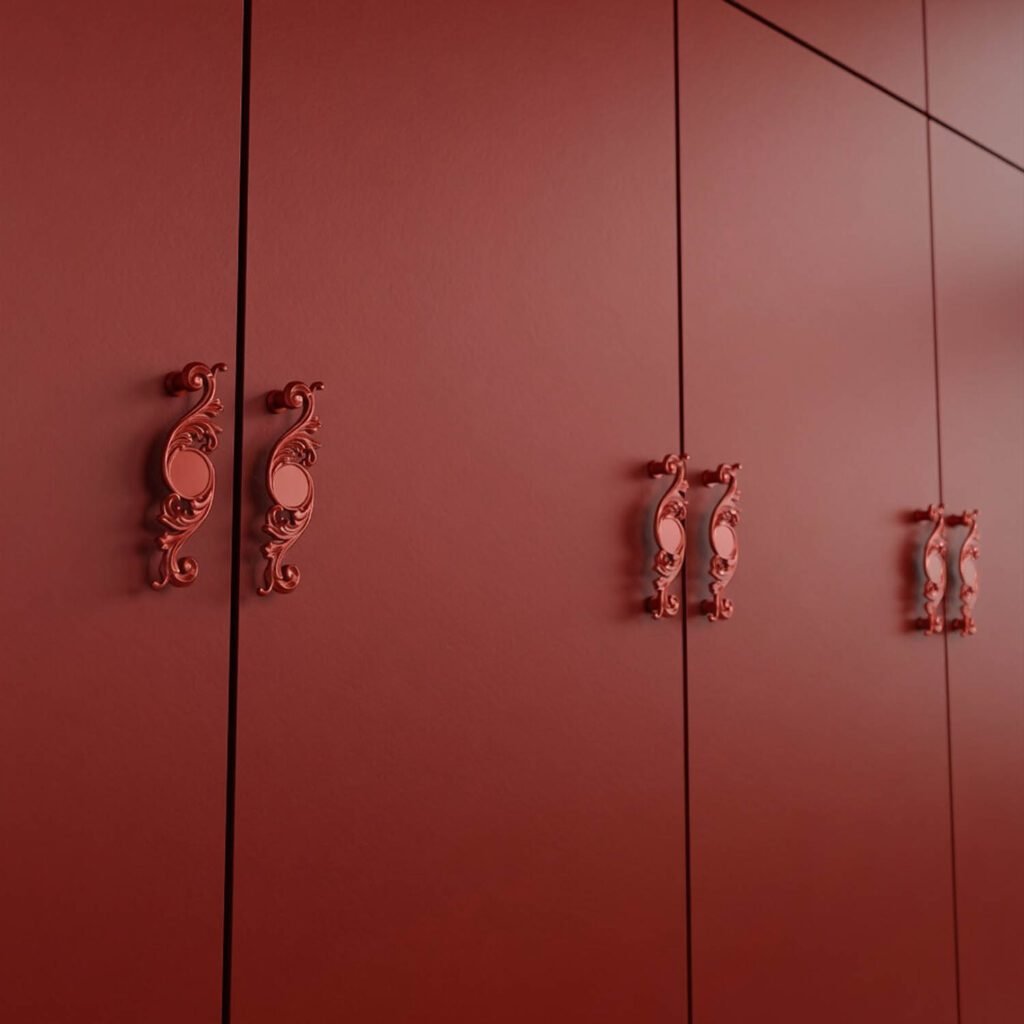
And yet. When the team at Holdon Paris showed me their project, I recognised something deeply familiar. The same obsession with detail. The same conviction that a tiny object — one we brush against ten times a day without ever really seeing it — deserves to be taken seriously. Their line says it all: "Your furniture deserves better than just a handle."
The project. Holdon designs and makes cabinet handles the way one designs a piece of jewellery. Bronze, copper, brass, sometimes a bio-sourced resin: real materials, each patinated by hand, in a Parisian workshop that works to order. The inspiration comes from Haussmann-era ironwork, from forgotten locksmithing, from all that decorative heritage Paris wears on its façades and that no one bothers to take seriously anymore. They do.
What struck me was the freedom of it. Thanks to 3D printing, Holdon creates sculptural forms no traditional foundry would dare attempt. You choose a silhouette, a motif, a finish, a size — and the piece becomes yours. Their collections carry names that sound like a stroll through the 1st arrondissement: Classica Europa, Palazzo, Arabesque. And their motifs — Rosace, Rinceaux, Lion Rugissant, Essentiel — each tell a small story.
Why me, and why now? Because a photographer spends a lifetime understanding how light falls on matter. And there is little more beautiful to photograph than patinated bronze catching the day. My role, in this venture, is to bring that eye: the art direction of the images, the staging of the pieces, that way of making an object exist before you've even touched it. The same craft I practise at the gallery, applied to another medium.
There is, I believe, a real coherence in this. Fine-art photography and the decorative object ask, at heart, the same question: how do we give value, care and meaning back to what daily life has rendered invisible?
That is exactly what this team does — remarkable, demanding, a little obsessive, just the way I like them. I'm proud and happy to have joined them.
Discover the work of Holdon Paris and let yourself be surprised by what a handle can become.
31 January 2025
New Artist
We are thrilled to announce that Jaroslav, an artist recognized for his mastery of liquid photography, is officially joining our gallery. His unique approach—combining light interplay and fluidity—produces mesmerizing images in which water becomes the focal point. With Jaroslav, we open new artistic horizons, celebrating the magic and poetry this liquid universe has to offer.
17 January 2025
TRIBUTE
Yesterday, Monday, January 16, the world lost an iconic figure of cinema and art. David Lynch, filmmaker, visual artist, and visionary, passed away, leaving behind an unmatched legacy. At Galerie Idan Wizen, we wish to pay tribute to this extraordinary man whose work has deeply influenced not only cinema but also my own vision as an artist and gallery owner.
artists of our gallery
We currently represent around 20 artists, ranging from young talent to internationally well-known artists. Principally consisting of but not limited to photography, our wide array of technique and artistry provides you with a large range of works allowing you to choose one perfectly suitable for you.
Justine Darmon was born in Paris in 1973 and discovered her passion for film photography in 1990 when her parents gifted her a Nikon FE and her grandmother passed down her old Rolleiflex. Quickly enchanted by the magic of the darkroom, she dreamed of pursuing photography professionally, but her family humorously encouraged her to follow a different path, saying, “You're not serious when you're 17…”.
After completing advanced studies in Social Policy and Society, Justine Darmon embarked on a career in Human Resources, specializing in managing human crises. Behind the masks, she learned to capture authentic emotions, revealing the true nature of individuals.
In 2015, she finally decided to pursue her passion fully and dedicated herself entirely to art photography. In less than ten years, her works have been exhibited in various galleries and festivals through remarkable collections such as "Music’Spirits," "Ambivalences," "Le Clown et la Danseuse," "Eclipse," "Cuba, Beyond Colors," "Les Lames de l’Âme," and "Sortir de son ombre."
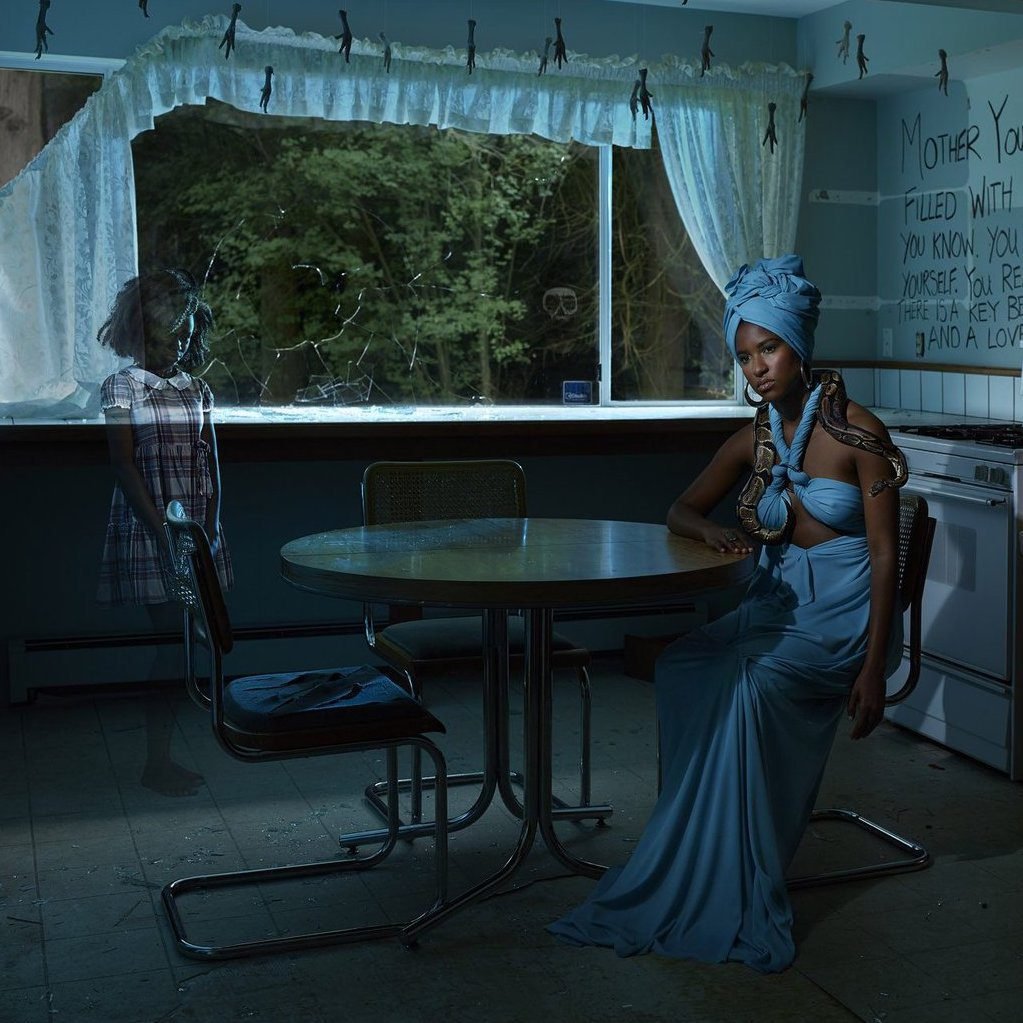
Justine Darmon's work explores a dreamlike universe, rich in symbols and references to collective memory. Inspired by the fairy tales and legends of her childhood, Renaissance and ancient painters, as well as humanist photographers and digital artists, she creates a gateway to her own dreams.
Through a subtle interplay of textures, shadows, and lights, Justine Darmon highlights the timeless and mysterious nature of her photographs. She encourages viewers to freely interpret her images, exploring their ambivalence and symbolic richness. Her interest particularly focuses on religious and mystical phenomena as collective reflections of society’s hopes and fears.
Arnaud Baumann, French portrait photographer and videographer, was born in 1953 and left an indelible mark on the world of photography. His career began alongside photographer Xavier Lambours, with whom he had the opportunity to capture unique and intimate moments by photographing the behind the scenes, hysterics and editorial conferences of Hara Kiri and Charlie Hebdo magazines. This experience marked the start of a promising career.
Over the years, Baumann has been published in renowned magazines such as Hara Kiri, Libération, Le Nouvel Observateur, Télérama, VSD, Paris Match and Géo, thus demonstrating his talent and versatility as a photographer.
During one of the key periods of his career, from 1978 to 1983, Baumann immortalized the evenings at Fabrice Emaer's "Palace". Through his photographs, he captures the very essence of these extravagant evenings, immersing us in the electric and liberated atmosphere of a bygone era.
Baumann devotes a large part of his career to portraiture, becoming a master in the art of revealing the essence of well-known personalities and cultural actors. His portraits are imbued with depth and sensitivity, to the point of capturing the soul of his subjects.
Throughout his career, Baumann reinvented his style while remaining faithful to what makes him a generational photographer. His process rethinks the links between the structure of his vision and the reality that surrounds it. His photographs are recognizable by their precise framing, precise colors and always mastered compositions.
Dina Goldstein's artistic journey spans over three decades, beginning as a photojournalist and eventually evolving into an independent artist with a focus on elaborate narrative photography. Her work is a testament to her intricate social commentary, blending cultural archetypes and collective imagery with narratives rooted in the human experience. Drawing from surrealism, Dina constructs compositions that lay bare the underbelly of contemporary life, challenging prevailing cultural influences and deep-seated belief systems.
In 2007, Dina Goldstein embarked on a specific journey, fueled by personal experiences and a critical view of the "happily ever after" narrative perpetuated by Disney and embraced by Western society. As a feminist and new mother, she took issue with the stereotypical portrayals of women and girls in Disney's stories. Her series "Fallen Princesses" (2007-2009) features humanized fairy tale princesses confronting modern-day challenges like cancer, addiction, obesity, war, and environmental degradation. This poignant work earned her the Prix Virginia in 2014, an international prize for women photographers, and led to exhibitions in Paris, Quebec and in the United States.
Dina's subsequent project, "In The Dollhouse" (2012), unfolds within an intricately conceptualized, life-sized dollhouse inhabited by human Barbie and Ken dolls. In this alternative reality, Barbie undergoes a transformation by cutting her iconic blond locks, while Ken embarks on a journey of self-discovery. The series sparks discussions about unattainable beauty ideals, the myth of perfection, and the relationship between beauty, power, and happiness. "In The Dollhouse" has been widely exhibited, including a feature in the Musee D'Orsay's Frida Kahlo and Diego Rivera catalog and inclusion in the FotoMuseo collection in Colombia.
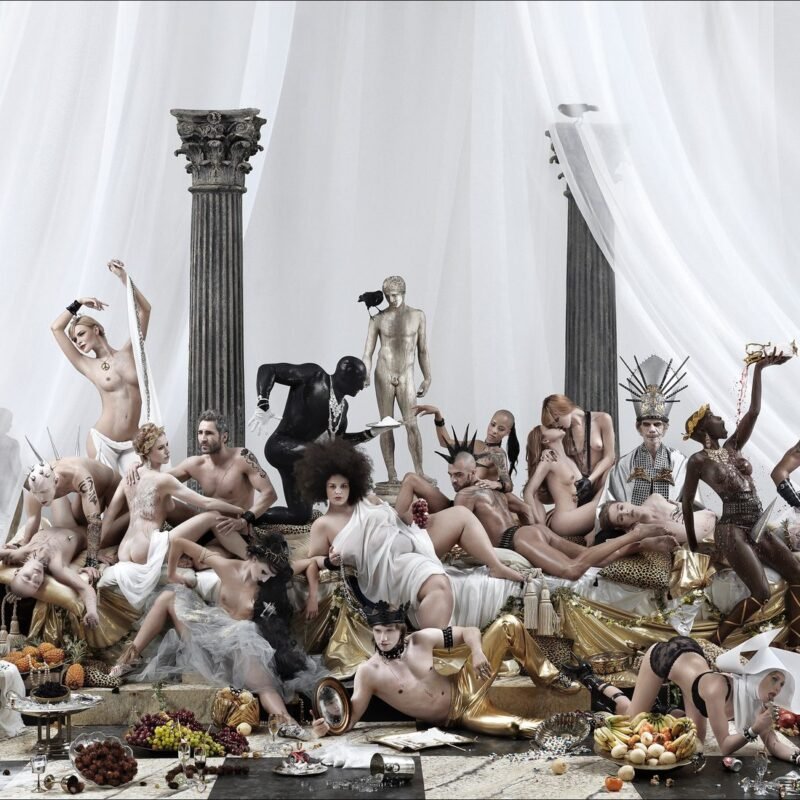
Her ambitious project "Gods Of Suburbia" (2014) delves into the world of established and fringe religions. Deities from various traditions are portrayed as mortal, adapting to the challenges of modern life. By offering an iconoclastic interpretation of how ancient belief systems intersect with modernity's pillars—technology, science, and secularism—Dina's surreal creations prompt viewers to contemplate the relevance of ancient ethics and enduring belief systems. The series has been exhibited internationally, with "The Last Supper" finding particular resonance in Italy.
purchase an artwork
start your journey
Find out more about the services we offer to help you find the perfect purchase for you! Explore our curated and featured selections. >>>
explore our different series
Feel limitless browsing our wide variety ordererd by collection >>>
shop on artsper
You will find a limited selection of our artworks on Artsper, carefully curated to show the best of what we have to offer. >>>